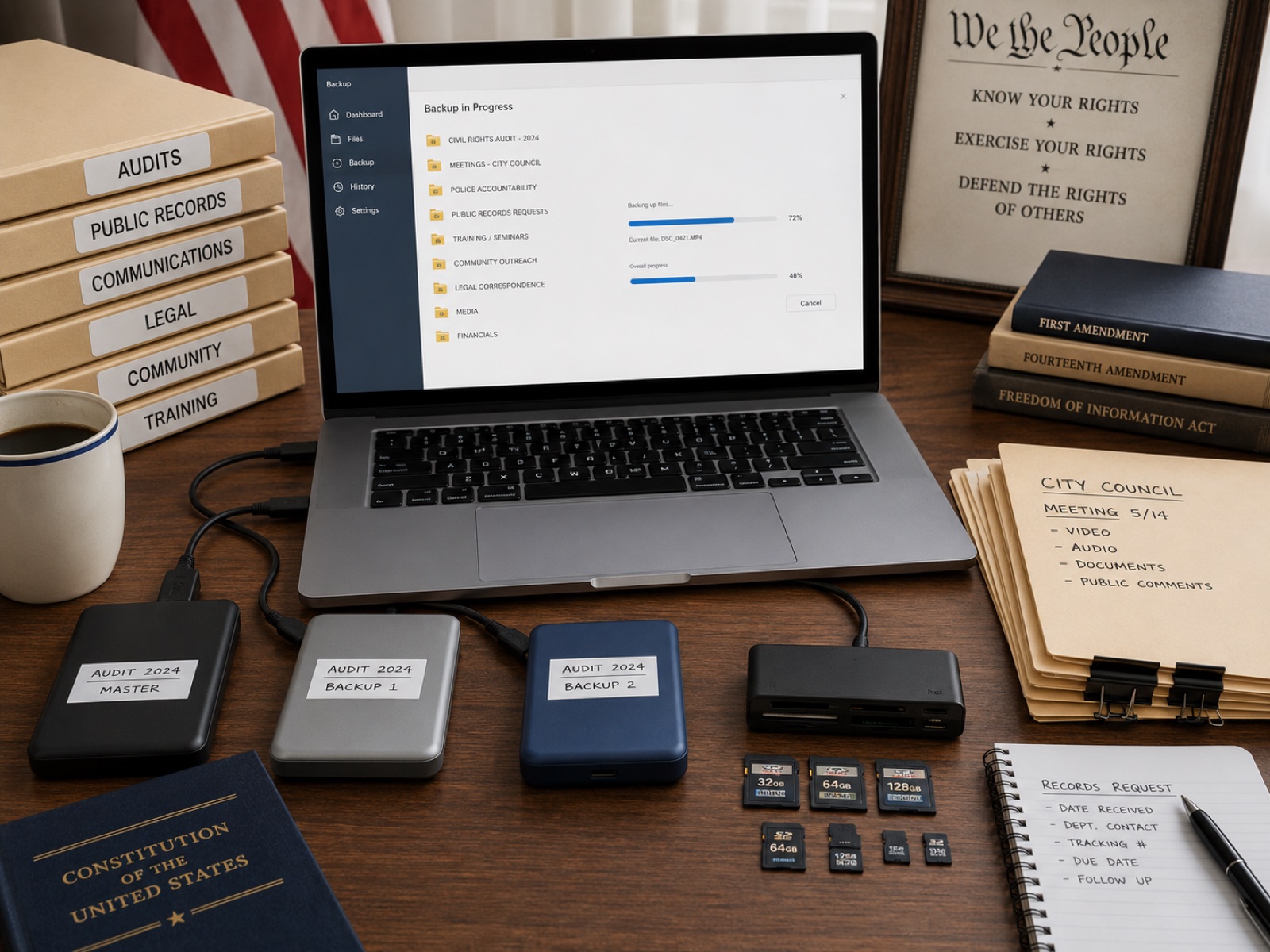
A curated library of rights education, public records templates, evidence checklists, and responsible publishing resources. Free to use, share, and adapt for your local context.
Templates and checklists adapted from real records work, real encounters, and real publishing practice. Six in active drafting now — Summit attendees get the first packaged release.
A clean, adaptable starting point for state public records requests. Scope, format, fee waiver, and appeal language.
Coming soonDate, location, officers, incident type, video formats, redaction expectations, and follow-up timing.
Coming soonTime, location, badge numbers, vehicle plates, witness contacts, statements, and chain of custody fields.
Coming soonCamera, audio, batteries, storage, backup phone, ID, contact card, and documentation gear.
Coming soonContext, raw-footage preservation, redactions, captions, sources, disclosures, and corrections policy.
Coming soonRecords requests, complaints, evidence backup, attorney intake, and platform takedown response.
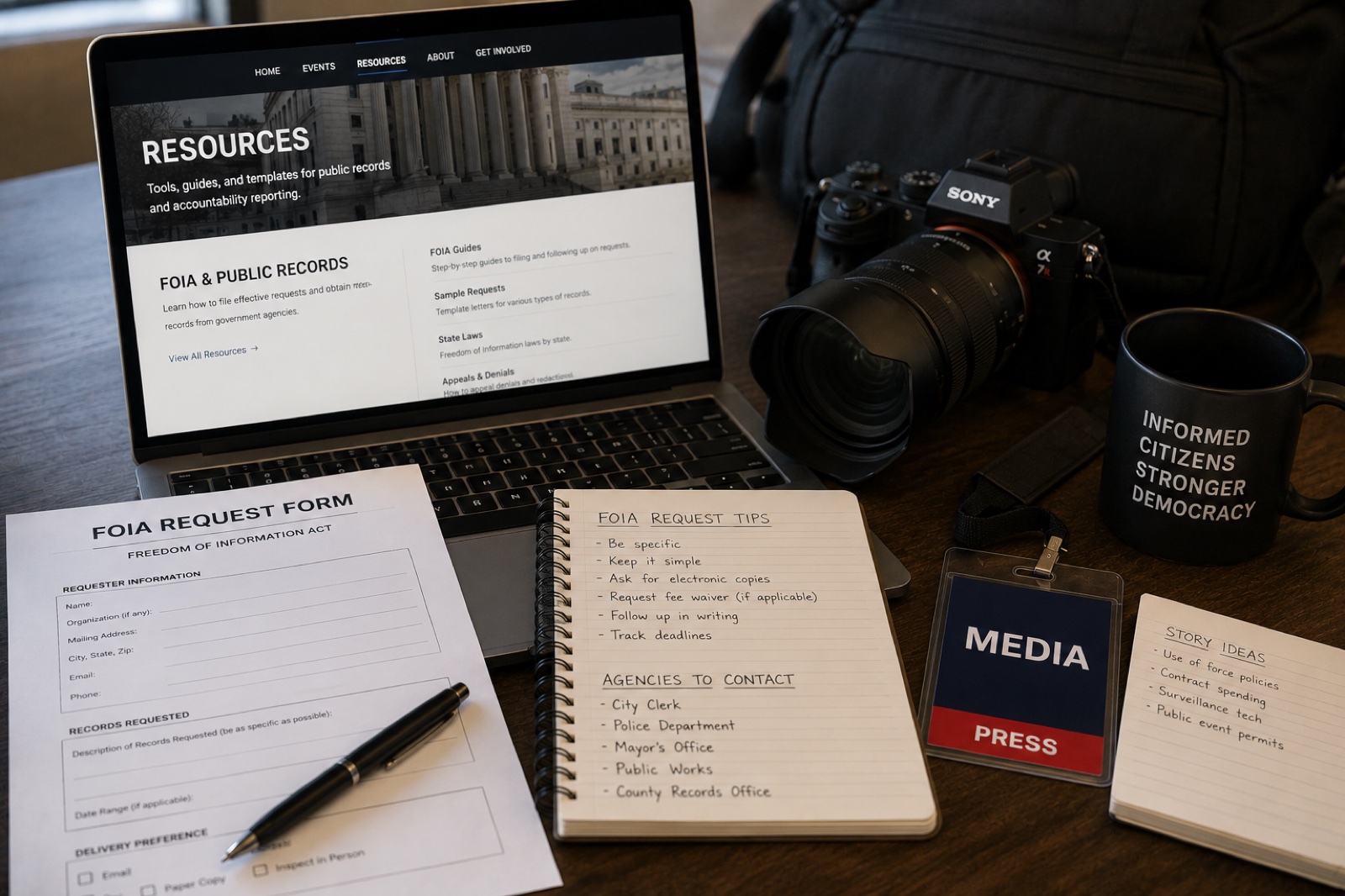
Drafted from the receiving end, not the law-school one. Records counters, mailroom intakes, and FOIA officers have all seen what works — these starting points reflect what gets answered.
Outside reading we draw on, and resources every attendee should bookmark. All external — open links in a new tab.
The ACLU's plain-language guide to the right to record, with state-specific notes and limits.
FIRE on First Amendment protections, time-place-manner limits, and how courts have ruled.
Litigation, research, and reform work on searches, seizures, and qualified immunity.
State-by-state report on civil asset forfeiture practices and reform progress.
The Office of Government Information Services on FOIA processing, mediation, and transparency trends.
Department of Justice summary of federal FOIA volume, response times, and exemption use in FY 2024.
Freedom Forum's annual survey on what Americans know and believe about the First Amendment.
Pew's data on platform reach, news consumption, and content behavior — context for civic media.
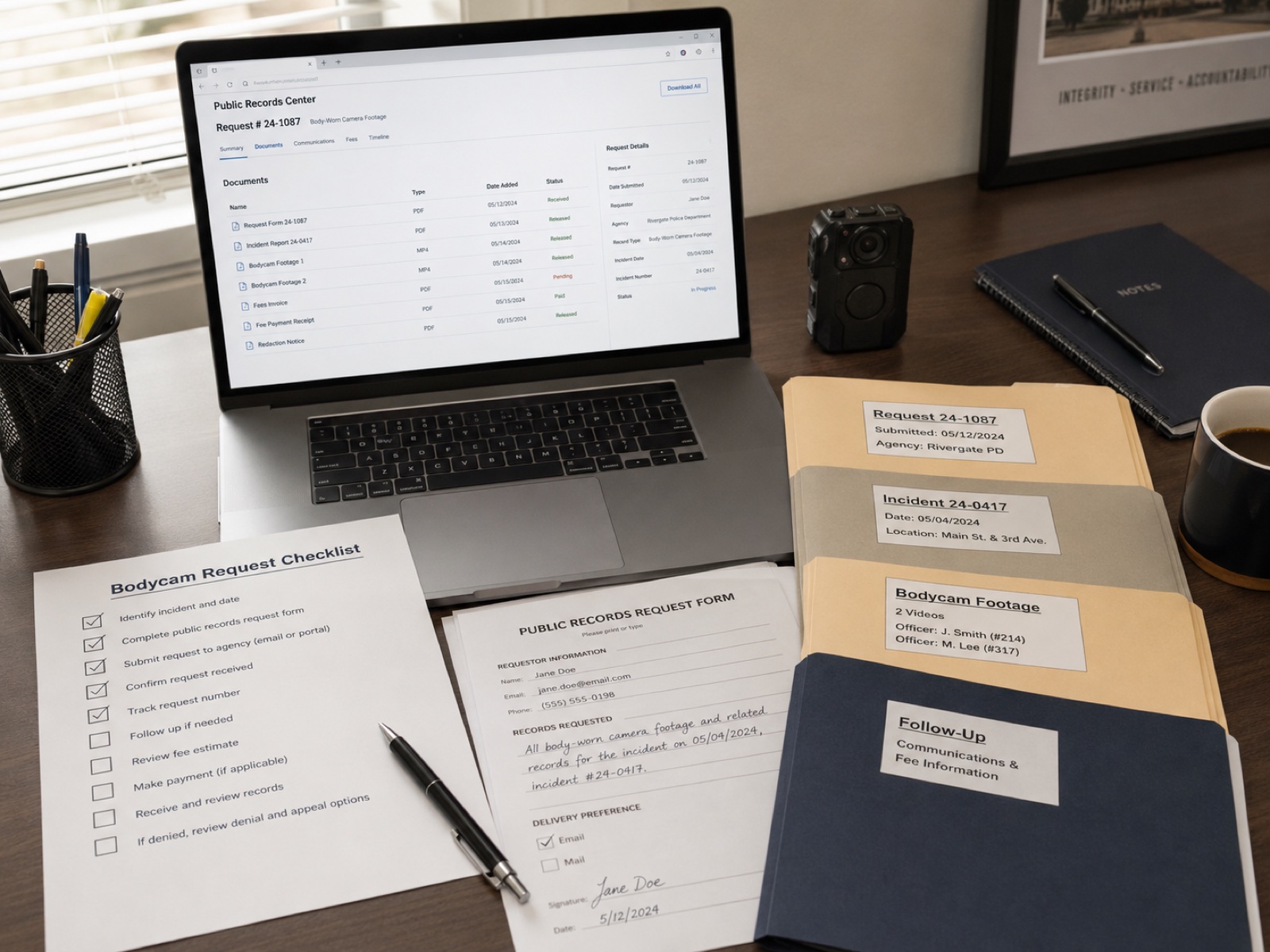
Track the request from sent to answered, file by case number, and keep the appeal letter ready before you need it. The slow work after the encounter is where most accountability actually lives.
These resources are educational and general. Recording laws, public records statutes, and search-and-seizure rules vary by state and jurisdiction. Consult qualified counsel for your situation. Templates are starting points — adapt them to your local statute and the agency you're requesting from.