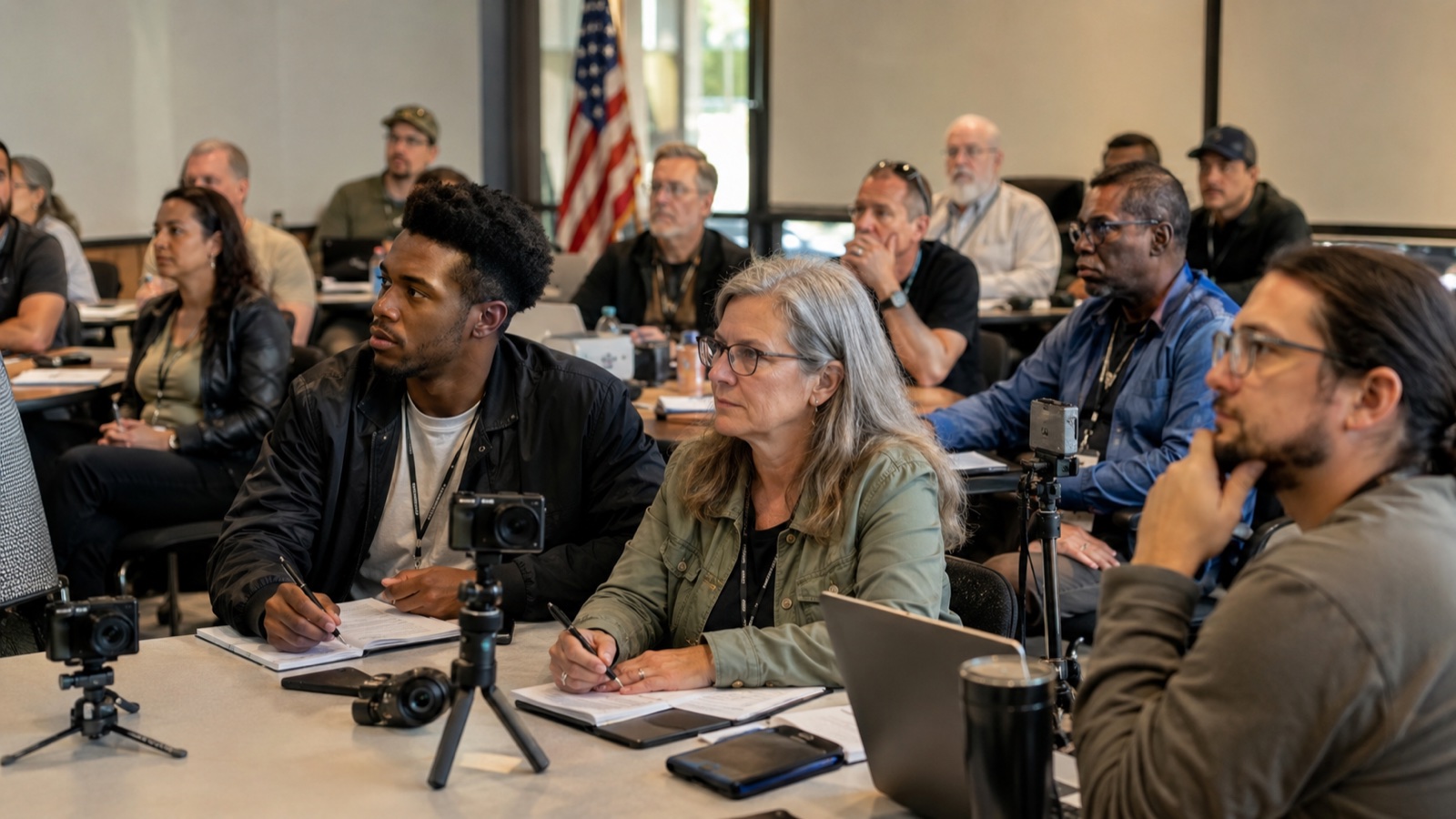
The Summit is built around citizen education rather than police training. It serves the public side of the encounter — the person holding the camera, asking the records question, attending the public meeting, walking into city hall, standing on the sidewalk.
The citizen-centered training conference for First Amendment auditing, the right to record, public records requests, Fourth Amendment rights, and government accountability content done responsibly.
Train citizen auditors, independent journalists, and transparency advocates to exercise the right to record, document police encounters and public building audits, file public records requests, publish responsibly, and pursue accountability when First Amendment auditing or Fourth Amendment rights are threatened or violated.
A country where ordinary people understand their rights, public officials respect lawful documentation, government transparency is treated as normal, and rights violations are met with calm evidence, accurate records, and meaningful follow-through.
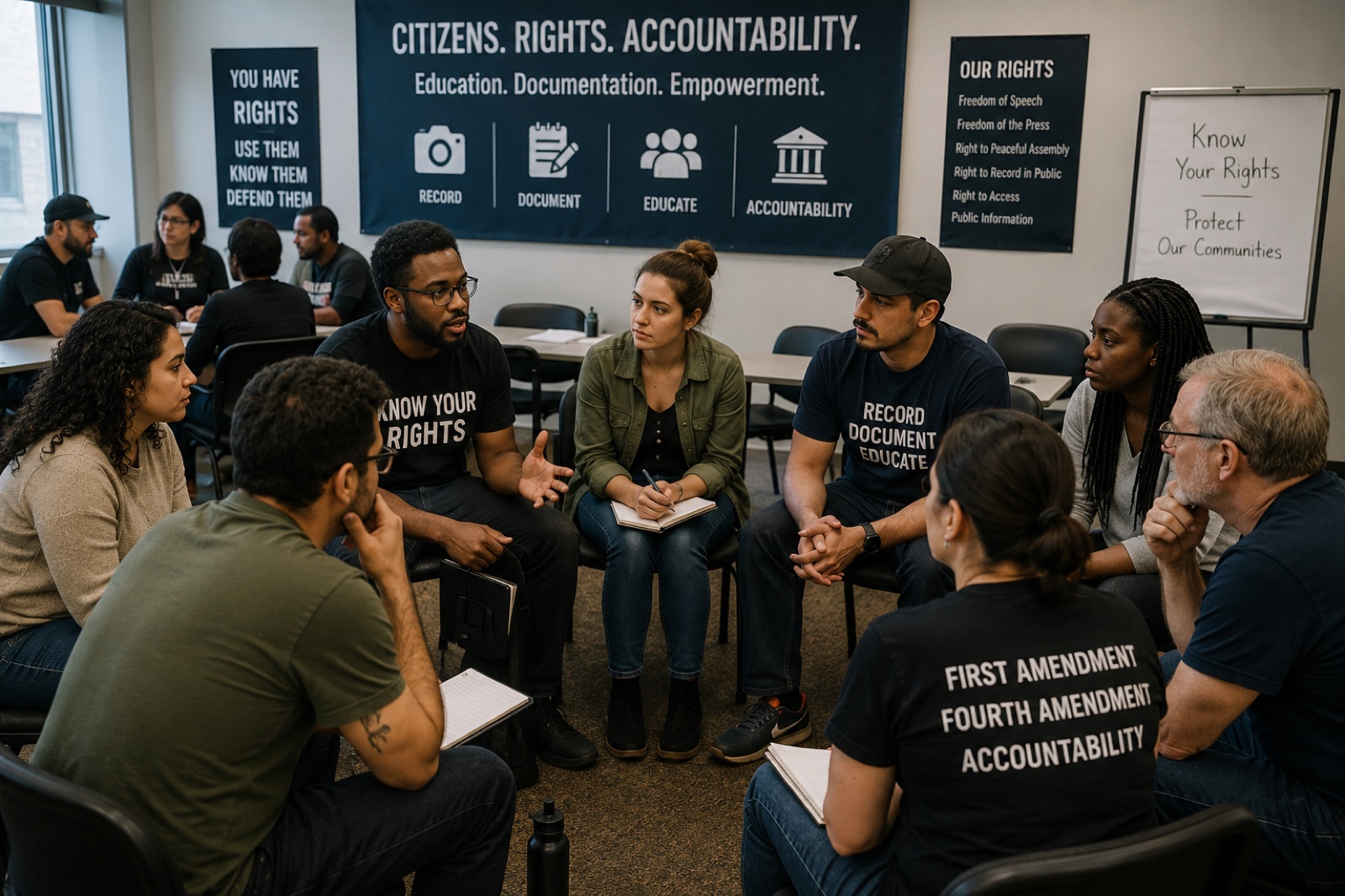
Three days of training that turns abstract constitutional doctrine into the practiced muscle memory of recording, requesting, preserving, and following through. Cross-ideological by design.
The values every speaker, sponsor, and attendee agrees to operate inside.
The Summit centers lawful observation, documentation, public records, and civic follow-through. No trespass, obstruction, threats, harassment, doxxing, or violence.
People should know what they can say, record, refuse, request, preserve, and challenge when interacting with public officials and law enforcement.
The strongest audit is often the calmest one. Discipline, distance, clarity, and de-escalation protect the person recording and improve the quality of the evidence.
The accountability process often begins after the encounter. Records requests, appeals, complaint files, bodycam, dispatch logs, and court records turn raw footage into a factual record.
Publish with context, preserve raw footage, avoid misleading edits, protect private citizens when appropriate, and separate facts from legal conclusions.
The First and Fourth Amendments are not partisan products. They protect people across the political spectrum and across every community.
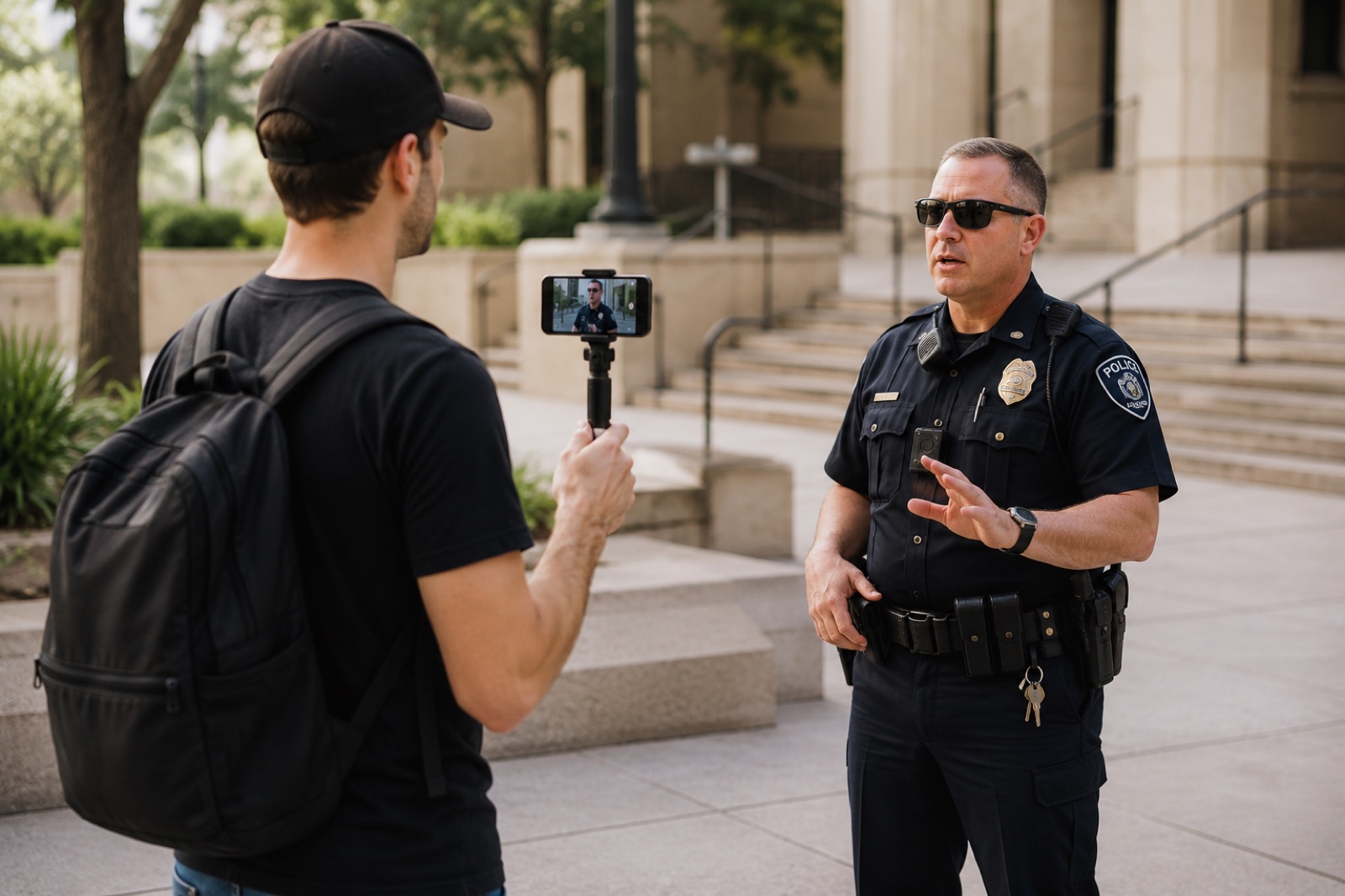
Discipline, distance, and clarity protect the person recording — and improve the quality of the evidence. Most encounters end the way this one is going: civil exchange between two people in a public space.
Millions of people see First Amendment auditing in action — police encounters, public building audits, courthouse documentation, traffic stops, bodycam request disputes, and public meeting conflicts online. Many are motivated by what they see, but they often lack training in the law, the limits, the records process, evidence management, and publishing responsibly.
The Summit addresses that gap with a complete accountability workflow: constitutional basics, real-world encounter skills, safe documentation habits, records requests, complaint pathways, editing and publishing discipline, and post-encounter follow-through.
The event welcomes people across political, ideological, and media backgrounds. Its unifying principle is simple: constitutional rights are only meaningful when ordinary people understand them well enough to exercise them lawfully, calmly, and effectively.
Sponsors and media partners support a high-intent audience that cares about rights, recording, public records, police accountability, legal education, creator tools, and independent civic media — at the intersection of civil liberties, the creator economy, and government transparency.
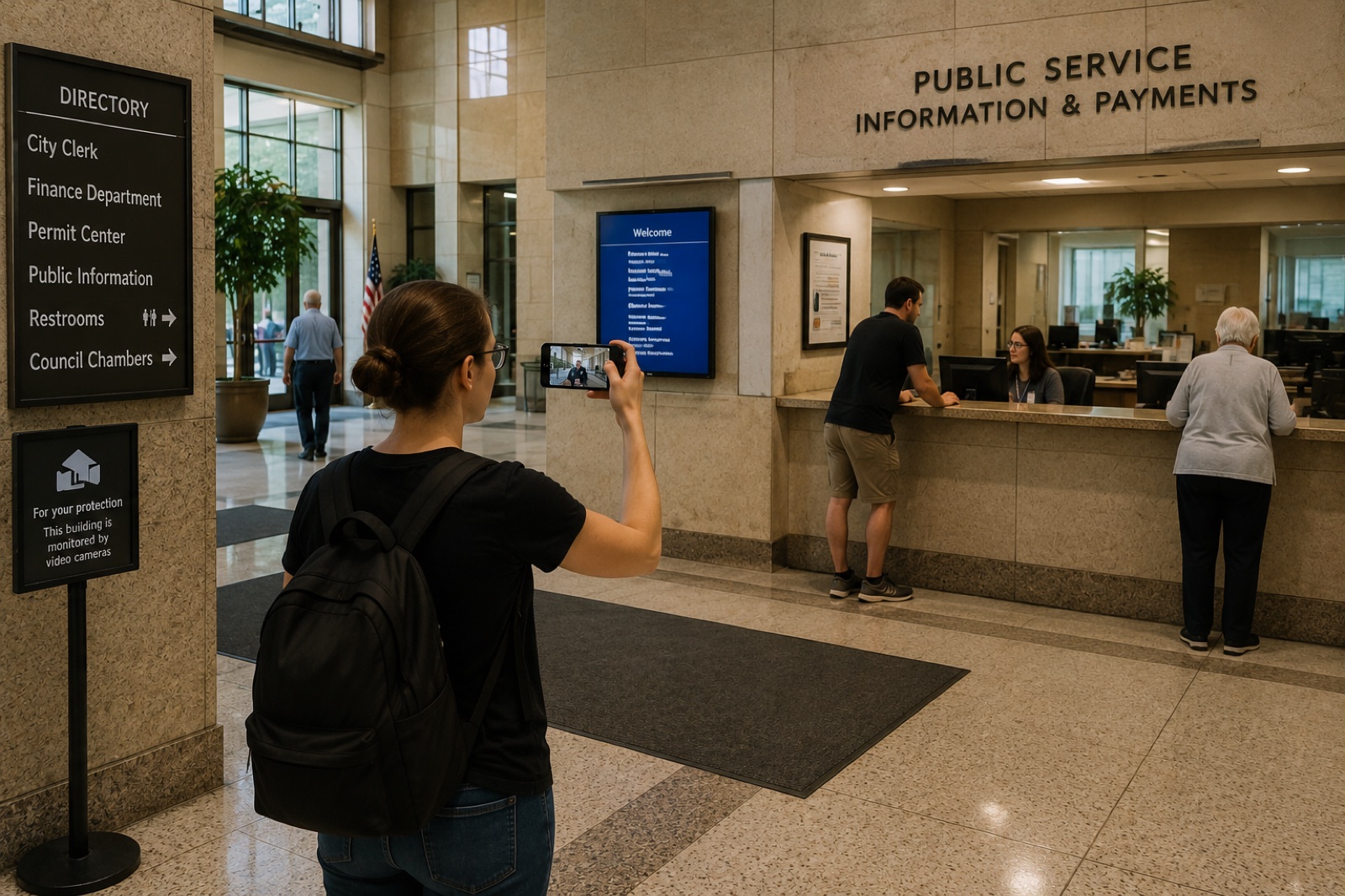
Sidewalks, council chambers, public-records counters, courthouse lobbies, jail-intake desks. Public buildings are public — and the practice happens where the people work, not where the slides are projected.
Six groups, one room — each with a different reason to be there and a different thing to take home.
Field technique, legal boundaries, records follow-up, safer publishing, audience credibility, and collaboration.
Practical knowledge for traffic stops, police encounters, the right to record, failure to ID demands, searches and seizures, trespass warnings, and public records requests.
Story structure, source verification, records use, evidence handling, editing, distribution, and legal risk awareness.
Connect with motivated observers, encourage better evidence practices, and build case-focused accountability networks.
Access a high-intent audience using cameras, phones, creator tools, records platforms, legal education, and civic technology.
A safer on-ramp before attempting audits alone — rights basics, scenario practice, and disciplined safety expectations.
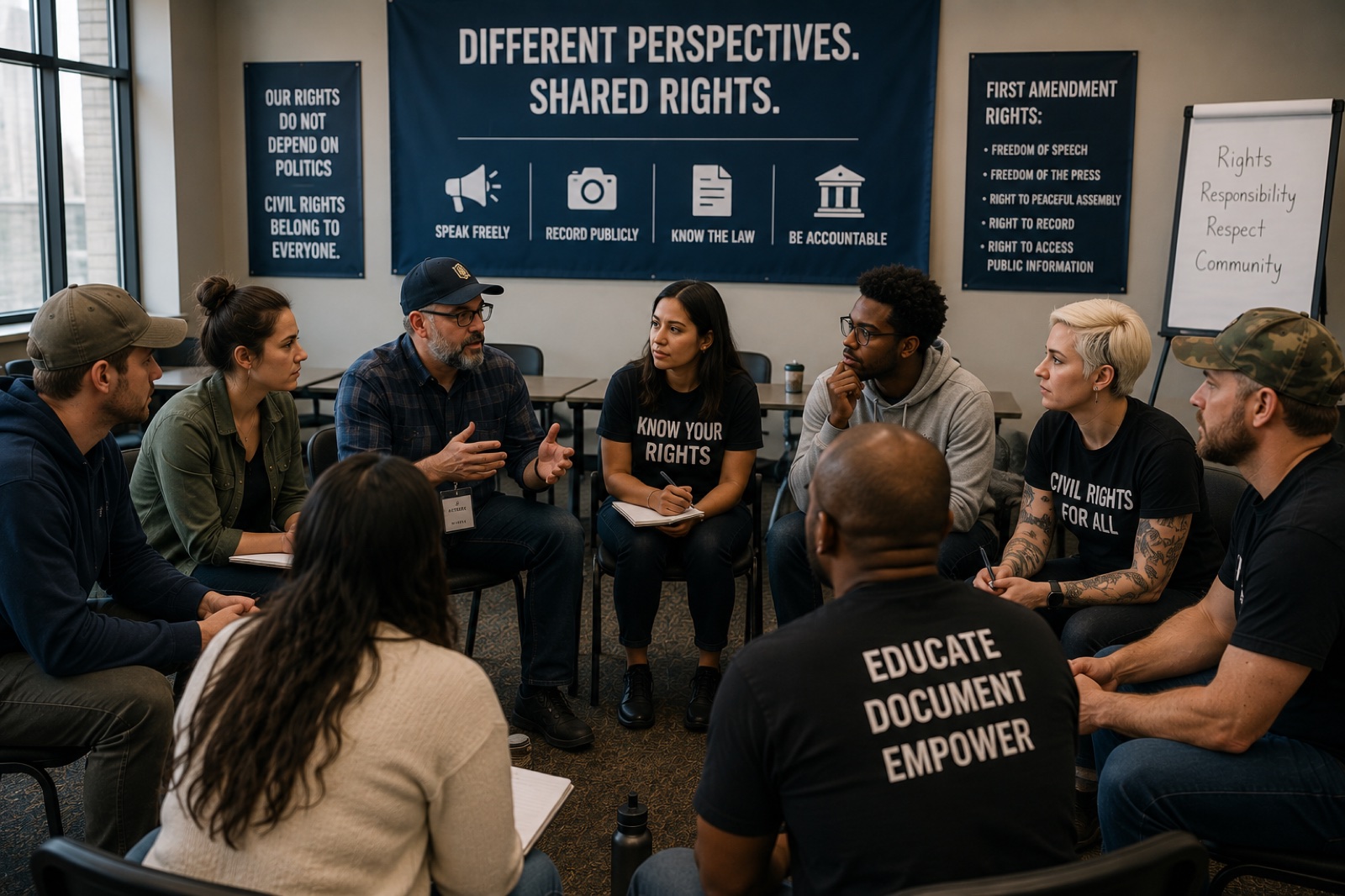
The First and Fourth Amendments are not partisan products. The Summit welcomes attendees from across political, ideological, and creator backgrounds — and asks all of them to operate inside the same disciplined practice.
The Summit is educational and does not provide individualized legal advice. We expect — and require — adherence to a code of conduct: no violence, threats, stalking, harassment, or doxxing; no instruction on evading lawful arrest or obstructing official duties; respect for local counsel, local law, court orders, restricted areas, medical privacy, schools, jails, and security-sensitive environments; and a commitment to preserve context, avoid misleading edits, keep raw footage when possible, and distinguish facts from legal opinions.